Wednesday, April 15, 2026

Limitations and Techniques of Cost Accounting Management


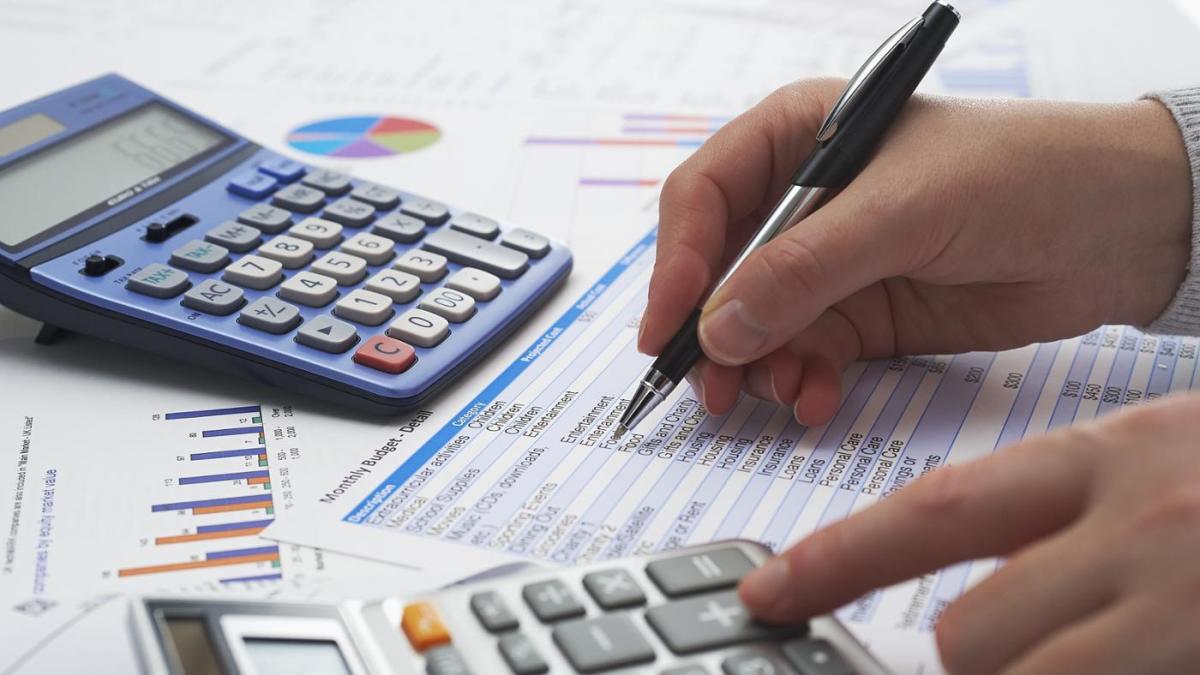
Cost Accounting Examine the Cost of Production.

 Installing and maintaining a cost-accounting system requires more manpower and resources. More analysis, allocation, and absorption of overheads require a considerable amount of additional work.
Installing and maintaining a cost-accounting system requires more manpower and resources. More analysis, allocation, and absorption of overheads require a considerable amount of additional work.

Limitations and Techniques of Cost Accounting

Cost Accounting is not an exact science like other branches of accounting but is an art which have developed through theories and accounting practices based on common sense and reasoning. These practices are changing with time. There is no stereotyped system of cost accounting applicable to all industries. It lacks a uniform procedure. Concepts, methods, and techniques of cost accounting are understood and applied differently by different industries. It is used only by big enterprises. The limitations of cost accounting are as follows:

Limitations of Cost Accounting

  1. The System is More Complex: Cost accounting needs to identify the different types of expenses and allocation of expenses is considered as a complicated system of accounting. It needs different forms and formulas to collect the data and prepare the reports. Also, it requires a number of steps in ascertaining such details. So it involves a more complex system. A more complex and complicated system of cost accounting is one of the limitations facing by the cost accounting.

  2. It is Expensive: Installing and maintaining a cost-accounting system requires more manpower and resources. More analysis, allocation, and absorption of overheads require a considerable amount of additional work. If the expenses incurred in ascertaining the cost is more than what is derived from it, then the process of cost accounting is meaningless. In short, the expenses of cost accounting should not be more than the profit derived from cost accounting. Many companies do not adopt cost accounting owing to the fact that it is more expensive and not economical.

  3. In-applicability of Costing Method and Technique: Techniques and methods of cost accounting differ from organisation to organisation. One standard method is not adequate for all the requirements of various organisations. It depends on the nature of business and the type of service/product manufactured by the firm. If the wrong technique or method is used, it will affect the result. So the in-applicability of the same costing method and technique is one of the key limitations of cost accounting.

  4. Not Suitable for Small-scale Units: One of the limitations faced by the cost accounting in installing it in all types of business is that it is not applicable to small-scale units. Through traditional accounting, small scale units can manage the cost effectively.

  5. Lack of Accuracy: Use of notional cost such as standard cost, estimated cost, etc. would not bring out the actual cost of the product. So the cost accounting lacks the accuracy of its results.

  6. Lack of Social Accounting: Social accounting is outside the scope of cost accounts. Cost accounting fails to take into account the social obligation of the business.

  7. Need Preparation of Frequent Reconciliation to Verify Accuracy: Results shown by cost accounts differ from those of financial accounts. Preparation of reconciliation statements to verify the accuracy is frequently required. This leads to an unnecessary increase in the workload.

  8. Duplication of Work: Many industrial units function effectively and control the cost effectively with financial accounting. Preparing cost accounting is unnecessary for them and it involves duplication of accounting work.

  9. Does Not Control Cost by Itself: Cost accounting will not control the cost. It only brings out the possibility of areas that need control. If the organisation does not have efficient management, the reports and results brought out by the cost accountant is useless. So cost accounting will not control the cost by itself. It needs effective and efficient management to use it.

  10. It is Based on Estimation of Previous Data: Most of the data used by a cost accountant is based on the estimation of indirect costs, assumptions, and previous data. Not using the actual data and costs is the limitation of cost accounting.

  11. Use of Secondary Data: Cost accounting depends on financial statements for a lot of information. Any errors or shortcomings in the information will affect the results.

  12. Lack of Cooperation of Employees: Cost accounting depends heavily on the cooperation of employees concerned. Lack of cooperation of employees will affect the overall performance of cost accounting. Noncooperation or opposition from employees will affect the results.

  13. It Only Brings Out The Cost of Goods or Services: To find out the operational results, we need to depend on financial accounting. Cost accounting will not bring forth the financial status of the company.

  14. It Serves The Information Need of The Management: We cannot depend on cost accounting for the financial information required by the shareholders, creditors, employees, and the society at large. It only serves the requirement of information needed by the management.

  15. Not Useful for Determining The Tax Liabilities: We cannot treat cost accounting as a basis for determining the tax liabilities of the business. Financial accounting is required for the determination of tax liabilities.

Unveiling the Powerhouses: Multinational Corporations - Driving Global Economies and Shaping Industries


Introduction:

Multinational corporations (MNCs) have become the driving force behind the global economy, playing a pivotal role in shaping industries, fostering economic growth, and influencing international trade. In this blog, we will explore the world of multinational corporations, diving into their significance, operations, impact on local economies, and the challenges they face. Join us as we unravel the complex web of MNCs and their role in today's interconnected world.

Large-scale enterprises

Understanding Multinational Corporations:

Multinational corporations are large-scale enterprises with operations in multiple countries. They transcend national boundaries, establishing subsidiaries, branches, and production facilities across the globe. Their activities span diverse sectors, including manufacturing, technology, finance, and retail. MNCs leverage their global reach, resources, and expertise to gain a competitive edge in the market.

Economic Significance:

MNCs play a crucial role in fostering economic growth and development. They attract foreign direct investment (FDI), create job opportunities, transfer knowledge and technology, and contribute to infrastructure development in host countries. Through their operations, MNCs promote innovation, productivity, and entrepreneurship, stimulating economic activity and raising living standards.

Impact on Local Economies:

a) Employment Generation: MNCs generate significant employment opportunities in host countries, both directly and indirectly. They create jobs across various skill levels, from entry-level positions to high-skilled roles, fostering human capital development and reducing unemployment rates.


b) Technology Transfer and Knowledge Sharing: MNCs bring advanced technologies, managerial practices, and expertise to host countries, facilitating knowledge transfer. Local firms and individuals benefit from exposure to new ideas, methodologies, and best practices, which can spur innovation and enhance competitiveness.

Challenges and Criticisms:


a) Economic Inequality: Critics argue that MNCs exacerbate economic inequality by concentrating wealth and power in the hands of a few. They highlight issues such as wage disparities, labor exploitation, and the potential for monopolistic practices that can hinder fair competition.


b) Environmental Impact: The global footprint of MNCs can have environmental implications. Their extensive operations, resource consumption, and waste generation contribute to climate change, deforestation, and pollution. Advocates urge MNCs to adopt sustainable practices and take responsibility for minimizing their environmental impact.

Understanding Multinational Corporations (MNCs): Characteristics, Operations, and Global Impact

There is no universally accepted definition of the term "MNC" (multinational corporation). However, it can be defined as a company that has direct investments in multiple countries and derives a significant portion (usually 20% to 50% or more) of its net profits from foreign operations. The management of an MNC makes policy decisions based on global alternatives. The size, performance, structure, and behavior of a firm determine its status as an MNC, typically organized around a national headquarters that exercises international control.

It is important to differentiate the term MNC from "International Corporation," which refers to a company with manufacturing or service operations in at least one country. MNCs, on the other hand, have direct investments in multiple countries, with a significant share in foreign markets. Transnational corporations (TNCs) consist of parent enterprises and their affiliates, with ownership and control dispersed internationally. TNCs have no principal domicile or central source of power. The term "global corporation" is often used interchangeably with TNC, referring to a company that considers the entire world as a single market and sells globally standardized products.

For a company to be classified as an MNC, it must fulfill certain criteria:

  1. Local subsidiaries are managed by nationals.
  2. The company has multinational central management.
  3. Complete industrial organizations, including research and development and manufacturing facilities, are maintained in multiple countries.
  4. The company has multinational stock ownership.
  5. Operations are conducted in multiple countries at different levels of economic development.


The managing headquarters of MNCs are typically located in one country (home country), while the enterprise carries out operations in several other countries (host countries).

Companies are motivated to pursue international investments for various reasons, including:

  1. Reducing the impact of tariffs.
  2. Gaining a greater market share or combating competition in foreign markets.
  3. Exploiting natural resources in host countries.
  4. Enjoying tax exemptions and benefits.
  5. Reducing production costs by utilizing cheap labor, materials, and transportation.
  6. Mitigating the impact of strict trade and industry regulations in the home country, such as pollution laws.


In conclusion, multinational corporations (MNCs) are companies that operate in multiple countries, deriving a significant portion of their profits from foreign operations. They have unique characteristics and motivations for international investments, contributing to the global economy and shaping business landscapes worldwide.

Conclusion:

Multinational corporations have emerged as powerful entities, driving global economies and shaping industries. Their expansive operations, economic contributions, and innovation prowess have transformed the world of business. However, they also face challenges and criticisms regarding issues such as economic inequality and environmental impact. As MNCs continue to evolve, striking a balance between profitability, social responsibility, and sustainable practices becomes crucial. Understanding the complex dynamics of multinational corporations is essential for comprehending the intricate interplay between global commerce, local economies, and societal well-being.

Logistical and Transactional Functions of Channels of Distribution


The channel of distribution performs a variety of functions such as selling, buying, risk-bearing, assembling, storage, transportation, grading, maintenance, post-purchase service, market information, financing, etc.

Functions of Channels of Distribution.

The functions performed by Channels of Distribution can be categorized in to three main groups. They are:

  1. Transactional Functions.
  2. Logistical Functions.
  3. Facilitating Functions.

Transactional Functions

Functions necessary for the transaction of goods are called transactional functions. Risk bearing, buying, and selling come under this function. Producers, after producing the goods, sell it to the intermediaries. Distributors or intermediaries sell these goods to the next intermediaries or the end-user. Likewise, the users of the goods buy it from the distributors. Buying, selling, and risk-bearing comes under the transactional functions. Distributors purchase goods from the producers in anticipation of selling it to the consumers for a profit. Due to the fall in price, the distributors may suffer a loss in the process. So they are bearing the risk of loss of money. Some goods are perishable. For example vegetables and fruits, may get spoiled during the transit. Break down of the truck, which transfers the perishable goods may spoil the goods. Distributors bear the risk of such damages. Buying and selling the goods to help the transfer of title from the producer to the user.

Logistical Functions

Logistical function performs the flow of goods, resources, and information between the point of origin to the point of consumption in order to meet the requirements of the customers. Logistics involves functions like the integration of information, inventory, material handling, grading, packing, transportation, warehousing, packaging, the security of the goods, etc. To facilitate the supply of goods on time, proper storage is necessary. Perishable goods like meat, fruits, vegetables, etc. demand more attention in storage. Logistical functions perform such activities. With the help of the Logistic function, goods are made available by the distributors to the consumers at the time of need.

Facilitating Functions

Facilitating functions facilitate both physical exchange and transaction of goods. It involves the post-purchase services, maintenance, financing, market information, etc. Distributors help the customers to choose the appropriate product for consumption. Distributors convey the demand of the customer to the manufactures. Also, the distributor conveys the opinion of the consumer to the producer. After-sales services and maintenance are required for certain goods. Distributors facilitate such functions. Sellers sometimes provide financial assistance to the buyers. They also provide necessary information about the products to the customers. Facilitating functions involves financing, market information, after-sales service, etc.

The channel of distribution performs a variety of functions such as selling, buying, risk-bearing, assembling, storage, transportation, grading, maintenance, post-purchase service, market information, financing, etc. Electronic goods need after-sales service and maintenance. Perishable goods need proper storage facilities. These are the main function of the Channels of Distribution.

Evolution and Definitions of Money, What Is Money?


Paper Money

Money consists of coins, currency notes. During the early part of civilization, money was in the form of a commodity like a cow, sheep, wheat, rice, tobacco, tiger teeth, elephant tusks, etc.

Evolution of Money

Before the advent of money, the activity of the exchange was carried out through the barter system. In the barter system, people exchanged goods and services in their possession with goods and services available with others. A farmer exchanged his surplus food grain with the weaver for his surplus cloth. This system helped the weaver and farmer to satisfy their needs. It was going well at the time when transactions are limited. When the transactions increased and the want or need of human being increased, it was felt the need of a single medium of exchange. This need for a single medium of exchange leads to the invention and evolution of money.


Some of the drawbacks of the Barter system are:

  1. Difficulty in the storage of wealth.
  2. Problems of a common measurement of value.
  3. The lack of double coincidence of wants.
  4. Loss due to sub-division of goods (For example if you subdivide a table, it loses its value. A person who is making the table cannot buy four or five items like food grains, oil, spices, etc. for his survival from different persons.)


It has taken hundreds of years for money to acquire its present form. Now money consists of coins, currency notes. During the early part of civilization, money was in the form of a commodity like a cow, sheep, wheat, rice, tobacco, tiger teeth, elephant tusks, etc. In cold countries like Alaska and Siberia, animal skins and furs were used as money. In tropical countries, elephant tusks and tiger jaws were used as money. Due to the lack of their durability, in the passage of time, they have given up their usage as money.


With the progress of civilization and economic advancement of societies, metallic coins made of gold, silver, copper, etc., were used as money. These coins were of two types:


Standard Coins: or full-bodied coins, as they were called because their face value and intrinsic value were the same.


Token Coins: are coins whose face value was considerably higher than their intrinsic value.


Subsequently, currency notes were introduced to replace metallic coins primarily for two reasons.

  1. To economize the use of precious metals and avoid their wastage.
  2. For the sake of convenience of storage and transportation of paper vis-a-vis the coins.


The present-day money has also passed through three stages:


  1. Metallic Money.
  2. Representative Paper Money.
  3. Credit Money.


In order to build up the confidence of the public in paper currency, initially, the currency notes took the form of representative notes. These representative notes were simply substitutes for metallic money i.e. convertible into gold or silver coins on demand by the bearer. With the increased use of paper money for transactions (due to expansion in production, population, and monetized section of the economy) it became almost impossible to allow such convertibility. The present-day currency notes are, therefore, no longer convertible into gold or silver coins and as such may be termed as flat money. At this time a sizeable portion of common money comprises this non-convertible paper currency.


Credit money is of more recent origin. People keep a part of their cash with banks which they can withdraw at any time they like or can transfer to some other person through a bank cheque. The cheques and drafts, remain the most convenient form of transferring value, have come to be accepted as bank money, though they are not money proper as their acceptance is optional. However, they perform the most important function of money, viz. as a medium of payment.


Electronic Money:

The most recent form of money represents electronic money. Money that is stored in a bank computer is called electronic money. It has baked with normal currency value. It can be transferred easily and reduce the physical work of counting and carrying the same with you. Net Banking, Online Credit Card Payments, online bill payments are some of the functions facilitated by the Electronic Money. Almost all fund transfer is now depended on Electronic Money. It is accepted everywhere in the world.

Evolution of Coins

With the progress of civilization and economic advancement of societies, metallic coins made of gold, silver, copper, etc., were used as money.

Nature of Money

Money is only a means and no end in itself. It is demanded not for its own sake but because it helps us in buying goods and services to satisfy our wants. Money cannot directly satisfy human wants, but assists in the production and exchange of goods and services. Its significance lies in its ability to command goods and services. Its significance lies in its ability to command goods and services and liquidate business obligations. Money provides mobility to capital and aids division of labor and specialization, thereby making large-scale production possible. It has been rightly remarked that we cannot eat money but we cannot eat without money.

Definitions of Money

Different economists have given different definitions of money. Let us see what are the definitions given by some of the well-known economists.

"In order for anything to be classed as money, it must be accepted fairly widely as an instrument of exchange." - A C Pigou.

"Money is what money does." - Walker (Very funny as well as accurate)

"Money is anything that is habitually and widely used as means of payment and is generally acceptable in the settlement of debts." - G D H Cole.

"Money constitutes all those things which are at any time and place, generally current without doubt or special inquiry as a means of purchasing commodities and services and of defraying expenses." - Alfred Marshal

By money is to be understood "that by the delivery of which debt contracts and price contracts are discharged, and in the shape of which a store of General Purchasing Power is held." - J M Keynes

"Money can be anything that is generally acceptable as a means of exchange and that the same time acts as a measure and a store of value." - Crowther

"Money is anything that is widely accepted in payment for goods or in the discharge of other kinds of business obligations."

Whtat is money?

From the above definitions, we can come to the conclusion, that "Money may be anything which is chosen by common consent as a medium of exchange or means of transferring purchasing power. It is widely accepted in payment for goods and services and in settlement of all transactions, including future payments. It should be accepted without reference to the standing of the person who offers it in payment. This is because money contains liquidity, i.e. generalized purchasing power, which can be passed on to others in exchange for goods and services. Money is received customarily by all without any special tests of quality or quantity."

Meaning and Definition of Financial Administration


Financial Administration

Finance is the lifeblood of every business. As personnel and materials which are necessary for the functioning of any office or an industry, an enterprise made available and function through money. Hence, finance fulfills a significant role in business. Socioeconomic forces unleashed by the industrial revolution have given a new meaning and dynamic content to financial administration.

Meaning of Financial Administration

The term Financial Administration consists of two words. 'Finance' and 'Administration'. The word 'administration' refers to the organization and management of collective human efforts in the pursuit of a conscious objective. The word 'finance' refers to the monetary resource. Financial administration refers to a set of activities that are related to making available money to the various branches of an organization to enable it to carry out its objects. Whether it is a family, business or a government department, its day to day activities depend on the availability of funds with which financial administration is concerned.

Definitions of Financial Administration.

According to L. D. White "Fiscal Management includes those operations designed to make funds available to officials and ensure their lawful and efficient use."

According to Jaze Gaston "Financial Administration is that part of the government organization which deals with the collection, preservation, and distribution of public funds, with the coordination of public revenue and expenditure, with the management of credit operations on behalf of the State and with the general control of the financial affairs of the public household".

Even though these definitions cover some important aspects of fiscal management, it fails to project a comprehensive scope of financial administration. G. S. Lall states that financial administration is concerned with all the aspects of financial management of the State. Since public administration is more and more concerned with public affairs and public interest, the frontiers of financial administration are expanding and therefore there is a need for a comprehensive definition of financial administration. As an attempt towards this direction, the following definition is presented:

"Financial Administration includes all the activities which generate, regulates, and distribute monetary resources needed for the sustenance and growth of the members of a political community."

Importance of Financial Administration

The importance of Financial Administration was not considered till the industrial revolution. When social life became more complex as a result of the industrial revolution, the role of the government increased manifolds. Further, the welfare of the state has caused a phenomenal increase in-state activity. The governments have entered into new areas that were kept out of the preview of the State. In this changed context, financial administration has gained more considerable significance for exploring ways and means to generate resources to meet the ever-increasing public expenditure.

Holiness: Our Identity and Calling


 “Be holy, because I am holy” (Leviticus 11:44; 1 Peter 1:16) is not just a suggestion—it is God’s call to His people in both the Old Testament and the New Testament. Holiness is at the very core of God’s nature. Our God is a holy God, and He desires that His people reflect His character.

When God appeared to Moses in the burning bush, He said, “Do not come any closer… Take off your sandals, for the place where you are standing is holy ground” (Exodus 3:5). This moment reminds us that holiness is not casual—it demands reverence, humility, and separation from the ordinary.

Again, when God descended on Mount Sinai, He instructed Moses to tell the Israelites to consecrate themselves for three days. They were to wash their clothes, purify themselves, and not come near the mountain carelessly (Exodus 19:10–14). God was teaching His people that approaching Him requires preparation, purity, and respect for His holiness.

In the New Testament, this call continues. The Apostle Paul writes to the church in Corinth, “To those sanctified in Christ Jesus and called to be His holy people” (1 Corinthians 1:2). Holiness is not optional—it is our identity and calling as believers. Likewise, in Revelation 22:11, it says, “Let the one who is holy continue to be holy.” Holiness is a continual pursuit, not a one-time act.

We are called to live holy lives in an unholy world. This world may be filled with impurity, compromise, and distraction, but God calls His church to stand apart. Each and every believer must take personal responsibility to grow in holiness. When individuals pursue holiness, the entire church experiences spiritual growth and strength.

Holiness is not only a personal blessing—it impacts society. We see this in the story of Abraham, who interceded for Sodom and Gomorrah. God said that if even ten righteous people were found, He would spare the cities from destruction (Genesis 18:32). This shows us that righteous and holy people are a blessing to a nation.

Jesus Himself said, “You are the light of the world… You are the salt of the earth” (Matthew 5:13–14). Light shines in darkness, and salt preserves and adds value. When we live holy lives, we influence the world around us for God’s glory.

So today, the call remains clear: pursue holiness. Set yourself apart. Walk in purity. Reflect the nature of God in your daily life. For when we become holy, we not only draw closer to God but also become instruments of blessing to the church, the community, and the nation.

Monday, April 6, 2026

Profit and Loss Account


Profit and Loss Account

Legal requirements of Profit and Loss Account (Schedule VI Part II)

As per the Companies Act, 1956 there is no prescribed proforma for the preparation of Profit and Loss Account. But the information and particulars are to be present in the Profit and Loss Account are laid down in Schedule VI Part II of the Act. Various items relating to income and expenditure of the company must be presented in the Profit and Loss Account as follows:

Income

Income: Profit and Loss Account required to be included in the following items under the head of Income:


a) Turnover: Turnover refers to the total sale value of goods or services rendered during the year. The amount of income from the sale is arrived at after deducting trade discount allowed and sales return from the total sale. If the company deals with more than one type of goods, income from a different class of goods are to be shown separately.


Turnover=Total Sale value - Sales return - Trade discount allowed.


b) Dividend received from Subsidiary companies if any.


c) Income From Investments: That may be:

i. Interest on trade investments such as loans and advances and

ii. Dividends and interest on investments in debentures and shares of other companies.


The two types of income from the investment must be shown separately.


d) Profit or Loss on Sale of investment in shares or debentures has to be shown as a separate item.


e) Miscellaneous income: Recovery of an insurance claim, rent on land and buildings, etc may come under this head.


f) Extraordinary profits: Profits earned during the year from non-recurring transactions, for example, due to change in the method of valuation of the stock, are shown under this head.

Expenses and Provisions


Items to be shown under different heads of Expenditures are as follows:

a) Cost of Goods Sold: Generally, we get the amount from adding opening stock and purchase and deduction closing stock.

Cost of Goods Sold

Opening Stock xxxx
Add Purchase xxxx
xxxx
Less Closing Stock xxxx

Details of stock i.e. finished goods, semi-finished goods, raw materials are shown separately under the respective items of stock and purchase

B) Manufacturing and Selling Expenses: The following items will come under this head:

1. Raw materials consumed (opening stock plus purchase less closing stock)
2. Stores Consumed
3. Power and Fuel
4. Rent
5. Repairs to buildings
6. Repairs to Machinery
7. Insurance
8. Rates and Taxes
9. Miscellaneous expenses
10. Salaries, Wages, and bonus
- Contribution to provident fund and pension fund
- Employee welfare expenses
11. Commission to selling agents, discounts, and allowances
12. Depreciation on fixed assets (As per rates specified in the Companies Act)
13. Interest on debentures and long-term loans paid or payable
14. Remuneration payable to Directors or managers, if any
15. The amount reserved for:
-Repayment of preference share capital
-Repayment of loans and debentures
16. Provision for Taxation
17. Provision for bad and doubtful debts
18. Audit Fee


Appropriation of Profits

The final step in the preparation of the Profit and Loss account is the appropriation or distribution of the profit of the current year and the profit of the previous year. The balance of the profit of the previous year brought forward and added to the current year's profit will have to appropriate by transfer to reserves and provisions for the dividend proposed to be paid to shareholders, Debenture Redemption Reserve, and arrears of depreciation of the previous year, if any.


The final balance of the profit after the appropriation is carried forward and taken to the next year's account. This part of the Profit and Loss Account may be regarded as a Profit & Loss Appropriation Account, or also known as "below the line" account.

Vertical form of presentation of Profit and Loss Account

Current Year Previous Year

I Income

Sales

Interest on Loans and Advances

Total

II Expenditure

Cost of goods sold

Raw materials consumed

power and fuel

Repairs to Machinery

Salaries, Wages & Bonus

Provision for Bad & Doubtful Debts

Audit Fee

Depreciation

Interest on Debentures

Total


III Profit before Tax (I-II)


IV Provision for Taxation


V Profit after Tax (III-IV)


VI Profit Available for Appropriation (V+VI)

Proposed Dividend on Equity Shares

Transfer to General Reserve


VII Balance transferred to Balance Sheet

Note: The Companies Act requires that figures of the previous year must be shown in a separate column alongside the respective figures of the current period.

Definition and Scope of Accounting


Definition of Accounting


Different authorities defined the subject of ‘Accounting’ in different ways. So it is difficult to define the subject through a single definition. Let us look at some of the prominent definitions:

American Accounting Association defined “Accounting is the process of identifying, measuring, and communicating economic information to permit informed judgments and decisions by users of the information.” This definition gives importance to the following:

  1. Identifying.
  2. Measuring and
  3. Communicating Economic Information.


American Institute of Certified Public Accountants appointed the Committee on Terminology. They defined “Accounting is the art of recording, classifying and summarizing in a significant manner and in terms of money, transactions, and events which are, in part at least, of a financial character and interpreting the results thereof.” This definition fully outlines the nature and scope of accounting activity. This is a popular definition.

A business is generally started with capital. Capital is the fund invested by the proprietor. He may also borrow some funds from the banks or other agencies. He uses a part of this amount to get the assets needed for the business. A part of the fund is used for the day to day activities of the business. Numerous transactions will take place every day, which is of different kinds. The duty of the accountant is to identify all transactions and record them in the books. Measure them in terms of money. Classify them and record them under different headings. The next step is to prepare a summary in the form of a profit and loss account and balance sheet. Then he has to communicate the net result to the interested parties in the form of a Balance Sheet and profit and loss account. Above steps are involved in the accounting.

The scope of Accounting

  1. The first step is to identify the events and transactions which are of a financial character. With the help of bills and receipts, an accountant can identify these transactions.
  2. Recording of transactions in the books of account is in terms of money and not in terms of quantities. So, after identifying the events or transactions, it needs to be converted or expressed in terms of money. Most of the transactions are happening in terms of money only. But in some cases, transactions in terms of quantity needs to be converted in terms of money.
  3. After identifying and measuring the transaction, it needs to be recorded in a book called 'Journal' or one of its subdivisions.
  4. Next is a grouping or classifying the transactions. Transactions that are of a similar nature can be recorded in one book. For example, rent paid can be recorded in a separate book called Ledger. In the ledger, a separate account is opened for each item like, rent account, electricity account, salary account, wages account, stationary account, etc. Wages paid during the year come under the heading "Wages Account." This will enable the business owner to find out the total wages paid during the month or year by adding up the wages spent during the month or year.
  5. After classifying and posting in different accounts, you will have a good quantity of data available with you. It is difficult to look at all the account heads separately to understand the financial position of the business. To make it easy, the accountant will summarize all the data in a meaningful form called a profit and loss account. By writing all the expenses on one side and the incomes on the other side. The difference between the totals of income and expenditure is the profit or loss of the business. Another form of expressing the financial status by arranging the assets and liabilities in a table is known as the Balance sheet. From the balance sheet, we can understand the financial position of the business. The profit and loss account and Balance Sheet are the summaries of all the transactions recorded in the journal and ledger.
  6. By using static tools like averages, ratios, percentages, graphs, etc. the results can be analyzed and interpreted. This analyzed data can be reported to the interested parties, which are easy to understand without going through thousands of entries made in the journal and ledger. An independent auditor can be employed to do the checking/auditing and making a report of the account. Generally, a certified Chartered Accounted will do the work of auditing and reporting. This report is very useful for taking decisions by the owner or management or by interested parties of the business like bankers, tax authorities, etc.

Saturday, April 4, 2026

ABC Analysis - Technique of Inventory Control


ABC Analysis Is A Type Of Analysis Of Material Dividing Into Three Groups.

ABC analysis also helps in reducing the clerical costs and results in better planning and improved inventory turnover.

What is ABC Analysis

ABC analysis is a type of analysis of material dividing into three groups called A-group items, B-Group items, and C-group items to exercise control over materials. Manufacturing concerns find it useful to divide materials into three categories.

An analysis of the annual consumption of materials of any organization would indicate that a handful of top high-value items (less than 10 percent of the total number) will account for a substantial portion of about 70 percent of total consumption value.

Remember: 10% of the total number of items carries 70% of the value. - "A" group items

Similarly, a large number of bottom items (over 70 percent of the total number of items) account for only about 10 percent of the consumption value.

Remember: 70% of the total number of items account for only about 10% of consumption value - "C"-group items.

Between these two extremes will fall those items the percentage number of which is more or less equal to their consumption value.

Remember: 20% of the total number of items account for only about 20% consumption value - "B" group items.

Items in the top category are treated as "A" category items. Items in the bottom category are called "C" category items and the items that lie between the top and the bottom are called "B" category items. Such an analysis of materials is known as ABC analysis or Proportional parts value analysis.

Graphical Representation of ABC Analysis

Graphical Representation of ABC Analysis

Classification of Items into A, B and C Categories

The logic behind this kind of analysis is that the management should study each item of stock in terms of its usage, lead time, technical, or other problems, and its relative money value in the total investment in inventories.

Critical items i.e., high-value items deserve very close attention and low-value items need to be devoted minimum expense and effort in the task of controlling inventories.

The Material Manager by concentrating on "A" class items can control inventories and show visible results in a short span of time. By controlling "A" items and doing a proper inventory analysis, obsolete stocks are automatically pinpointed.

ABC analysis also helps in reducing the clerical costs and results in better planning and improved inventory turnover. ABC analysis has to be resorted to because equal attention to A, B, and C items will not be worthwhile and would be very expensive.

The following steps will explain to you the classification of items into A, B, and C categories.

The following steps will explain to you the classification of items into A, B, and C categories.

  1. Find out the unit cost and the usage of each material over a given period.
  2. Multiply the unit cost by the estimated annual usage to obtain the net value.
  3. List out all the items and arrange them in the descending value. (annual value)
  4. Accumulate value and add up the number of items and calculate the percentage on the total inventories in value and number.
  5. Draw a curve of percentage items and percentage value.
  6. Mark off from the curve the rational limits of A, B, and C categories.

How to Maintain Optimum Stock Level?

Maintenance of proper stock of each item of materials is one of the main functions of the stores' department. A large quantity of material in-store leads to huge investments, deterioration in quality, large space requirements, etc. Less stock also leads to higher costs, frequent purchases, and loss of production, etc. Therefore, it is important to maintain the optimum stock level. One of the best ways to maintain stock is to determine the minimum and maximum stock levels as per the necessity and maintain it regularly.

Storekeepers usually use the scientific technique of material management to ensure the optimum quantity of material in-store and make purchases accordingly. To do that following levels are fixed in advance:


Maximum Stock Level
Minimum Stock level
Re-ordering level
Danger level

Reordering Level

The re-ordering level is a level at which the storekeeper will initiate the steps to purchase fresh supplies. This level is called the re-ordering level or ordering level. This level usually lies between the minimum and maximum stock levels. This level will usually be higher than the minimum stock level to cover the unexpected delay in the delivery of fresh supplies or abnormal usage of materials. The following points need to be taken into consideration while fixing the re-ordering level

1. Economic ordering quantity
2. Rate of consumption
3. Time required for the delivery of fresh supply.

The following formulas can be used for calculating the re-ordering level.

Reorder level = Maximum consumption x Maximum re-order period

or

Reorder level = Minimum level + consumption during the time required to get fresh deliveries

Example 1

Calculate the reorder level from the following information:
Maximum Consumption = 100 units per week
Minimum Consumption = 50 units per week
Maximum reorder period = 4 weeks

Solution:

Reorder level = Maximum consumption x Maximum reorder period
= 100 x 4 = 400 units.


Example 2
Find out the order level from the following information:
Maximum Stock: 250 units
Minimum stock: 100 units
The time required for receiving fresh supplies: 10 days
Daily consumption of material: 5 units

Solution:

Reorder level = Minimum level + consumption during the time required to get fresh deliveries
= 100 + (5 x 10)
= 150 units.

Minimum Stock Level

The minimum stock level is a level of stock that must be kept in-store at all times. This is a level of an item of material below which the stock in hand is not allowed to fall. The objective of this limit is to avoid the possibility of interruption of production due to the shortage of material. The following points need to be taken into consideration while fixing the minimum stock level.


  1. The time required for the fresh supply of material - the lead time.
  2. Rate of consumption of material during the lead time.
  3. Reorder level


The following formula can be used to determine the minimum stock level.

Minimum stock level = Reorder level - (Normal consumption x Normal reorder period)

Example:
Calculate the minimum stock level from the following data:
Net normal consumption = 500 units per day
Normal reorder period = 10 days
Reorder level = 8,000 units

Solution:
Minimum stock level = Reorder level - (Normal consumption x Normal reorder period)
= 8,000 - (500 x 10)
= 3,000 units


Maximum Stock Level

The maximum stock level is a quantity of material above which the stock of any item should not be allowed. To avoid blocking working capital and making undue investments in stock, the maximum stock level is to be fixed. It also helps to maintain the proper quality of raw materials. The following points must be taken into consideration while fixing the maximum stock level:


  1. Availability of storage space
  2. The cost of carrying the inventory
  3. The amount of working capital available
  4. Economic ordering quantity
  5. The possibility of change in market trend
  6. The normal rate of consumption of material during the reordering process.
  7. The time necessary for a fresh delivery of materials.
  8. The possibility of loss due to deterioration/evaporation, etc.
  9. Price fluctuation.
  10. Insurance costs if any.


The following formula is normally in use for calculating the Maximum stock level.

Maximum stock level = Reorder level + reorder quantity - (maximum consumption X minimum re-order period)

Example:
Find out the Maximum stock level from the following information:
Reorder Level = 32,000 units
Reorder quantity = 30,000 units
Minimum Consumption = 3,000 units per month
Minimum reorder period = 2 months.

Solution:
Maximum stock level = Reorder level + reorder quantity - (maximum consumption X minimum re-order period)

Maximum stock level = 32000 + 30000 - (3,000 x 2)
= 62000 - 6,000 = 56,000 units.

Danger Level

The danger level is a level below the minimum level. This is a level at which urgent action must be taken to procure new stock otherwise the stock may exhaust and could affect the production. This level is calculated by taking into account the time required to get the materials by the shortest possible means. Generally, the following formula is used to calculate the Danger level:

Danger level = average consumption x Maximum reorder period for an emergency purchase.


Average stock level

The average stock level can be determined by using the following formula:

Average Stock Level = 1/2 of (Maximum stock level + Minimum Stock level)

or

Average Stock Level = Minimum stock level + Half of the reordering quantity.

Reorder Quantity or Economical Order Quantity

It is better to determine in advance how much is to be purchased when the material reaches the reorder level. This quantity is called the reorder quantity. It is the quantity when it is received, it will not exceed the maximum stock level. It is also called Economic Order Quantity, because the purchase of this quantity of material is most economical as well. The frequent purchase will result in an increase in the cost of transportation. Too many goods may block the working capital for a long time. The following points need to be taken into consideration while fixing the reorder quantity.

  1. Cost of transportation.
  2. Cost of storage (warehouse rent, insurance, heating, and lighting expenses).
  3. Cost of ordering.
  4. The availability of working capital.
  5. Minimum and maximum consumption for the lead time.
  6. The time necessary to obtain deliveries.
  7. The possibility of loss due to evaporation or deterioration.
  8. Changes in the fashion trend.
  9. Interest on investment.
  10. Obsolescence losses.
  11. Store staff expenses.

What Is Articles of Association of a Company


Origin of Articles of Association.

The rights and duties of its members and the company are to be recorded. There come the need and origin of Articles of Association

Articles of Association of a Company

A company is an incorporated body. Therefore, there should be some rules and regulations are to be formed for the management of its internal affairs and conduct of its business as well as the relation between the members and the company. Moreover, the rights and duties of its members and the company are to be recorded. There come the need and origin of Articles of Association. The Articles of Association is a document that contains the purpose of the company as well as the duties and responsibilities of its members defined and recorded clearly. It is an important document that needs to be filed with the Registrar of companies.


In the Table A of Schedule 1 of the Companies Act, 1956 is given a model regulation for the management of the company limited by shares. All or any of the regulations contained in Table A may be adopted by a company limited by shares. Articles of Association is a document that all companies should prepare.

Meaning and Purpose of Articles

Section 2(2) of the Companies Act defines Articles as the Articles of Association of a company as originally framed or as altered from time to time in pursuance of any previous companies law or of this Act. But it is not clearly defined what is an Article of Association. Basically, the Article of Association contains the rules and regulations relating to the management of companies' internal affairs. It is similar to a partnership deed in a partnership.

The memorandum defines the area or business of the company. A company cannot operate beyond the limits of its memorandum. At the same time, an Article contains the rules and regulations of the business of the company. Therefore, the Article is subordinate to and controlled by the Memorandum.

The Article of Association contains the following details:

  1. The powers of directors, officers, and the shareholders as to voting, etc.,
  2. The mode and form in which the business of the company is to be carried out
  3. The mode and form in which the changes in the internal regulations can be made.
  4. The rights, duties, and powers of the company as well as the members included in the Articles of Association.


The article is binding not only to the existing members but also to the future members who may join in the future. The hires of members, successors, and legal representatives are also bound by whatever is contained in the Article. The Articles bind the company and its members as soon as they sign the document. It is a contract between the company and its members. Members have certain rights and duties towards the company and the company has certain obligations towards its members. At the same time, the company also expects some duties and obligations which the members have to fulfill for the smooth functioning of the company.

Registration of the Articles.

Every private company, an unlimited company, and a company limited by guarantee must have their own Article and it should be registered with the Registrar of Companies along with the memorandum as per Section 26 of the Companies Act, 1956. But it is not necessary for a Company limited by shares to have their own Articles. It may either have its own articles or it may adopt either wholly or partly Table A of Schedule I of the companies Act as Table A of Schedule I of the Companies Act will automatically apply to such companies unless it has been excluded or modified. There are three options for the company limited by shares. They are:

1. It may adopt Table A in full or.
2. It may wholly exclude Table A and set out its own Articles in full; or
3. It may set out its own Articles and adopt part of Table A.

If such a company goes in for the first alternative, then it is not necessary to get any Article of Association Registered. It has only to endorse on the face of the Memorandum of Association that it has adopted Table A as its Articles of Association.

It is important to note that The articles of a private limited company must contain the following details:


  1. If the company has a share capital, the amount of share capital with which the company is to be registered.
  2. The number of members with which the company is to be registered.


In the case of a company limited by guarantee, the articles should state the number of members with which the company is to be registered as per Section 27 (2) of the companies Act.

The articles of association must be printed, divided into paragraphs, numbered consecutively, and signed by each subscriber of the Memorandum of Association in the presence of at least one witness who shall attest the signature and shall likewise add his address, description, and occupation if any as per Section 30.

Limitations and Techniques of Cost Accounting Management

  Cost Accounting Examine the Cost of Production. Installing and maintaining a cost-accounting system requires more manpower and resources. ...