Wednesday, May 6, 2026

What is Inflation and Types of Inflation and How Does it Affect Our Economy?


Inflation: Causes, Definitions, and Key Features

Pigou defines inflation as the expansion of money income in relation to the productive output of the agents receiving payment. He also states that inflation occurs when money income expands disproportionately to income-earning activity.

R. C. Hawtrey associates inflation with the issuance of an excessive amount of currency, while T. T. Gregory describes it as an abnormal increase in purchasing power. In general, inflation can be defined as a sustained increase in the overall price level resulting from high rates of growth in the aggregate money supply.

These definitions share a common feature, emphasizing that inflation is a process of rising prices rather than a state of already high prices. They indicate a state of imbalance between aggregate supply and demand at the prevailing price level.

In simpler terms, prices rise due to an increase in the money supply relative to the supply of goods. This perspective aligns with the quantity theory of price change. However, it is important to note that price increases in a dynamic economy can also occur due to factors unrelated to the aforementioned causes.

Keynes disagrees with the quantity theory approach, which holds that the volume of money is responsible for price increases. Instead, he argues that inflation is caused by an excess of effective demand. According to Keynes, true inflation only begins after reaching full employment, where employment changes in proportion to changes in the quantity of money, and prices change accordingly.

Keynes believes that we need not excessively fear inflation because as long as there are unemployed resources, an increase in the money supply will stimulate employment. Only after reaching full employment will increases in the money supply lead to a rise in the price level. Keynes acknowledges that prices may rise even before full employment, which he refers to as "semi-inflation" or "bottleneck inflation."

Keynes introduced the concept of the inflationary gap. This refers to a situation in the economy where anticipated expenditures exceed the available output at base or pre-inflation prices. The inflationary gap represents the difference between disposable income and the output available for consumption.

Essentially, when increased investment or government expenditures, or both, cause money income to rise but the capacity to produce goods and services cannot keep up, an inflationary gap emerges, leading to price increases. It arises when the total money income available for consumption exceeds the total output at pre-inflation prices.

Key features of inflation include:

  1. Inflation always involves a rise in prices, representing a continuous increase.
  2. Inflation is primarily an economic phenomenon originating from within the economic system and influenced by economic forces.
  3. Inflation is a dynamic process observable over an extended period.
  4. It is important to distinguish between cyclical movements and inflation.
  5. Inflation is primarily a monetary phenomenon caused by excessive money supply.
  6. True inflation occurs only after reaching full employment.

Types of Inflation

Classification of Inflation: Exploring Different Types

Inflation can be categorized based on various factors, particularly the degree of price rise. The following types of inflation can be distinguished:

  1. Creeping Inflation: This refers to the mildest form of inflation, which is generally considered non-threatening to the economy. Some economists even view it as a beneficial tool for promoting economic development, as it helps prevent stagnation. However, there are differing opinions, and some argue that creeping inflation should be addressed promptly to avoid potential escalation.

  2. Walking Inflation: Walking inflation represents a slightly faster pace of price increases compared to creeping inflation. It serves as an early warning sign of potential hyperinflation. When the rate of price rise accelerates beyond walking inflation, it enters the realm of running inflation.

  3. Running Inflation: Running inflation occurs when prices escalate at a rapid pace, surpassing the rate observed in walking inflation. This indicates a higher level of inflationary pressure within the economy.

  4. Jumping or Galloping or Hyperinflation: Hyperinflation signifies the most extreme form of inflation, where prices surge continuously and there is virtually no limit to how high they can climb. Hyperinflation is an alarming indication of severe instability in a country's monetary system. It significantly devalues fixed-income assets such as salaries, savings, bonds, and other financial instruments.

In summary, the classification of inflation encompasses various types based on the speed and intensity of price increases. From the mild creeping inflation to the extreme hyperinflation, each type carries distinct implications for the economy and the value of financial assets.

Evils of Money

Evils of Money Means Improper Use of Money
Money which has been source of so many blessing to mankind becomes a source of peril and confusion unless we control it.

Evils of Money


Invention of money has not proved to be an unmixed blessing as its use has become a source of so many evils too.  If money is not used properly, it can create havoc and may prove to be disastrous for the mankind.  Some of the evil effects of money are giving hereunder:

Economic Defects


A.  Use of money has given rise to greed and exploitation of poor which has resulted in greater inequalities of incomes and wealth.  History shows that it is the economic exploitation that triggers any social upheaval.

B.  By facilitating Borrowing and lending, money may encourage over-capitalization (i.e. using too much capital in place of labour) in production, thereby creating large scale unemployment in the economy.

C.  Money helps in extending the scale of production, which after certain limits may result in a situation where production far exceeds the demand.  This leads to fall in level of prices, unemployment, decline in incomes and thereby misery for the masses.

D.  When a government/Central bank increases the supply of money by simply printing new notes, it leads to sharp rise in prices.  This adversely affects the purchasing power of fixed income groups in the society.  Resulting in class conflicts and social disorder.

Social Defects


i)  Money has encouraged many kinds of anti-social activities like gambling, fraud, robbery etc.

ii) It Makes people greedy and acquisitive

iii) It encourages tendencies of exploiting others.

However, it cannot be denied that most of the evils listed above arise because of improper use of money.  These are not evils of money itself.  Hence, there is a greater need to use money as a faithful servant than become slaves of money and invite troubles.  It has been rightly remarked that money which has been source of so many blessing to mankind becomes a source of peril and confusion unless we control it.

What Are the Qualities of a Good Salesperson


Good Health and appearance are to be maintained.

Good health also has an indirect effect on the person's mental make up and general attitude towards his work

What Are the Qualities of a Good Salesman?

What are the qualities that define a good salesperson?

Various selling situations demand distinct qualities from salespeople. Nevertheless, certain common traits are essential across all types of sales roles, although the degree to which each quality is required may vary depending on the specific sales position.

Qualities of a Successful Salesperson: Essential Traits for Thriving in Sales

Sales is a dynamic field that requires a unique set of skills and qualities to excel. While different types of sales roles demand specific attributes, there are several key qualities that are universally essential for any successful salesperson. In this article, we will explore the core characteristics that contribute to sales excellence and discuss their significance in different sales situations.

Physical Qualities:

A salesperson's health and appearance play a significant role in their overall performance. Given the frequent travel involved in most sales jobs, often under challenging conditions, good health becomes paramount. Maintaining a robust physical state not only directly impacts one's ability to meet the demands of the job but also influences mental well-being and work attitude. Physical ailments can lead to mental distress and frustration, hindering a salesperson's effectiveness. Additionally, a professional and impressive appearance, characterized by a neat and clean attire, is crucial. Salespeople should project a well-groomed image, enhancing their credibility and building trust with clients.

Communication Ability:

Effective communication lies at the heart of successful selling, particularly in creative selling and other sales approaches that emphasize interaction. The quality of a sales presentation significantly relies on the salesperson's communication skills. This entails having a controlled voice devoid of speech defects, a strong command of language, the ability to create a positive impression, and active listening skills. A competent salesperson not only possesses the gift of gab but also understands the importance of actively listening to clients' needs and concerns.

Mental Qualities:

Sales professionals must exhibit certain mental qualities that contribute to their effectiveness. Analytical ability, intelligence, and conceptual skills are essential traits that allow salespeople to navigate and solve customer problems. The capacity to apply critical thinking to various scenarios enables salespersons to offer tailored solutions, build trust with clients, and drive successful outcomes.

Education and Experience:

Adequate educational qualifications are necessary for a salesperson to thrive in their role. In most instances, a minimum requirement of a bachelor's degree is expected, except in specialized sales positions that may require sales engineers or technical experts. Experience also holds great value in the sales domain, with relevant work experience often being a significant factor in assessing a salesperson's suitability for certain roles.

Enthusiasm:

An infectious enthusiasm for their product and company is a vital quality in a salesperson, particularly when engaging in creative selling techniques. A successful salesperson should be genuinely excited and proud of what they represent. This necessitates comprehensive knowledge not only about their company and offerings but also about competitors in the market. Demonstrating enthusiasm and sincerity goes a long way in capturing the attention and interest of prospects.

Courtesy:

Good manners are of utmost importance for all salespeople, irrespective of their specific sales approach. Listening attentively, speaking considerately, and showing respect are key aspects of maintaining professionalism and fostering positive client relationships. By exhibiting courtesy, salespeople create a comfortable environment that promotes open dialogue and builds trust.

Initiative:

Initiative is a critical trait in sales, as most salespeople operate with a high degree of autonomy. Self-starters who actively seek out new customers and innovative ways to engage existing ones often achieve greater success. Taking the initiative demonstrates a proactive approach to business development and enables salespeople to adapt and thrive in a competitive market.

Empathy:

The ability to empathize with clients is a hallmark of an exceptional salesperson. Understanding the buyer's perspective and tailoring solutions to address their specific needs are key to establishing meaningful connections and securing successful sales. By putting themselves in the client's shoes, salespeople can better comprehend the challenges faced by customers and offer valuable insights and recommendations.

Dependability:

A reliable salesperson can be entrusted with handling situations beyond their formal training. The ability to adapt and tackle unfamiliar circumstances is highly valued by organizations. Companies seek salespeople who can be counted on to deliver exceptional results and handle unforeseen challenges with professionalism and confidence.

Integrity and Honesty:

Given the access that salespeople have to a company's funds, integrity and honesty are non-negotiable qualities. Responsible handling of financial matters, transparency in dealings, and a commitment to truthfulness are essential for maintaining ethical standards and fostering long-term trust with both the organization and clients. A salesperson's integrity is reflected in their commitment to providing accurate information and not misleading clients, even if it means sacrificing immediate sales.

In conclusion, the qualities discussed above collectively contribute to the makeup of an exceptional salesperson. While specific sales roles may require additional or specialized attributes, these core qualities form the foundation for success in the sales field. Aspiring sales professionals can cultivate these traits through training, practice, and a genuine passion for understanding and serving customers. By embodying these qualities, salespeople can enhance their effectiveness, build strong client relationships, and achieve lasting success in their careers.

Leadership Quality - Barack Obama Qualities


Barack Obama

Obama is a president of enormous intelligence and considerable political skill.

Emerging leaders - Barack Obama.

Every new president raises many questions in the public mind. A lot of people were asking whether Barack Obama would be able to achieve his ambitious goals and become a change in the history of America. Who is this Barack Obama?


Obama was a relative newcomer to the national political scene. He goes for new challenges whenever he achieves new heights. This quality of his setting increased and more significant challenges ushered him to the post of American President.

I observed something exceptional in Barack Obama. One thing that I observed is that he is not hesitant to be surrounded by other brilliant people from whom he gets advice. He acquires creative ideas from them. He attends meetings with a liberal heart. He is not stuck up with ego. He is willing to pursue creative ideas. He is willing to listen. He is not like many of us. We attend meetings with a made-up mind and will not let others crush our ego. It is possible because of this ego problem, we are not receptive or willing to change and not growing.

When we look at his background, a half white, half black, raised by his maternal grandparents since he was 10, who never encountered his father, achieved the most significant height a man can achieve. What about me and you? Many of us may say, "it's luck" that he attained that position. It is not luck or surroundings or genetics or color, etc., but he is taking focused actions every day with a calculated risk in his life. He has gone through the steps of learning, growing, teaching, writing, earning, and gaining the trust and support, etc. But not afraid of the challenge. He remains a seeker of challenges. Set his mind on his Goal. He grew up to be a leader who comes out to address the most urgent problems of mankind.

We require hundreds of leaders who are not afraid to rise up not for their gain but to address the problems of ordinary people. When you do that, it will bring fame and money. It includes responsibility.

Do we recognize what is anticipating us tomorrow? If you fathom the secret of these successful people, you might effectively follow them with a determination to accomplish many things that you desire to achieve. There is no fear but learning, growing, and become successful. Every day you wake up with a determination to improve and grow.

Be willing to face the reality of Life.

Many times there will be criticism, defeat, setbacks, pitfall, etc. You may have to face these challenges. You may commit mistakes. Do not allow them to hold you back. Keep growing. Wherever you are, whatever you are undertaking, does it with a determination to succeed. You may be a worker, a mother, a teacher, a preacher, a housewife, an officer, a trainer, or whatever may be your profession, does your work with a determination to succeed.

No one can prevent you from doing your best. Only you can restrict you from succeeding. When severe situations come up in your life, precisely perform what you required to do and keep going forward. Sounds good and possible for others but impossible for you? Allow me to tell you it is possible for you. You just need to develop that mindset.

Wonders of World - Magnetic Hill at Leh Ladakh, India

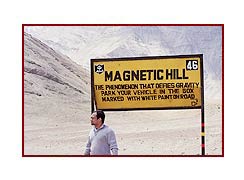
 Bill-board at Magnetic Hill

Bill-board at Magnetic Hill
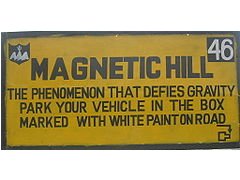
Bill Board
Bill Board
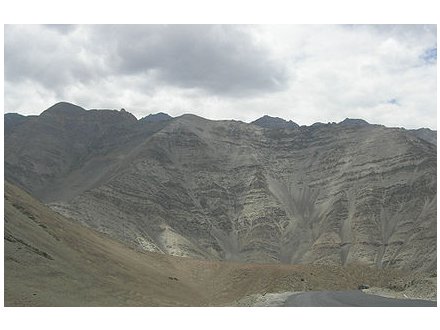
Magnetic Hill
Magnetic Hill

Wonders of World - Magnetic Hill at Leh - Ladakh, India


This is one of the wonders of the world. There is a magnetic hill in Leh - Ladakh. It is one of the wonders of Himalayan Mountain.

To experience the magnetic power you have to place your vehicle on a specific spot (Local authority has put up a billboard to identify the place) and switch off the vehicle. Soon you will notice the vehicle will climb the hill at a speed of around 20 km/hr. Many tourists from around the world come here to experience the Himalayan wonder. It is informed by the local people and ITBP (Indo Tibetan Border Police) personal that this magnetic power can be experienced while flying above the Magnetic Hill. If the Helicopters and Aircraft flying above the magnetic hill comes within the radius of the magnetic hill, it will start to jerk. It is advised to fly at a specific speed and hight above the Magnetic Hill to avoid accidents. The Indian Airforce pilots are aware of this phenomenon and usually avoid this area. It is situated at an altitude of 14,000 feet. (above sea level). The magnetic hill is situated at a distance of 30km from the Leh town. You need to take the Leh - Kargil Baltic National Highway to reach the Magnetic Hill.

The Himalayan region around this place is worth visiting.

How to Reach Leh and Ladakh by Air: Regularly scheduled flights from Delhi, Chandigarh, Jammu, and Srinagar are operated to Leh by different airlines.
How to Reach Leh and Ladakh by Road: Srinagar - Leh road (Approx. 440 km) is open for traffic from June to November is one of the oldest land routes to Ladakh. Most part of the travel will be climbing mountains on this road. You can have a beautiful view of the Himalayan mountains on this trip. Jammu and Kashmir State Road Transport Corporation (J&KSRTC) operates Deluxe and Ordinary bus services between Srinagar and Leh. Taxis are also available at Srinagar.

The New Manali - Leh road (Approx. 475 km) is another land route to Ladakh. It covers the snow-filled peaks of Western Himalayan Mountain and will be open from July to October, depending on weather conditions.

Unveiling the Majestic Marvel: Red Fort in Delhi - A Symbol of India's Rich Heritage


Red Fort, Delhi Fort or Lal Quila

Delhi Fort/Red Fort
Delhi Fort/Red Fort

Introduction: Red Fort or Delhi Fort (or Lal Qila in Hindi)

The Red Fort in Delhi stands as an iconic testament to India's glorious past, captivating visitors with its awe-inspiring architecture and historical significance. This UNESCO World Heritage Site is a must-visit destination, drawing tourists from all corners of the globe. In this blog, we will delve into the captivating history, architectural marvels, and cultural significance of the Red Fort in Delhi.

History and Significance:

The Red Fort, known locally as "Lal Qila," was commissioned by the Mughal Emperor Shah Jahan in 1638. Its construction took nearly a decade to complete, and it served as the residence of the Mughal emperors until 1857. The fort witnessed significant events in India's history, including the Indian Rebellion of 1857 and the subsequent British colonial rule. Today, it stands as a symbol of India's struggle for independence and national pride.

Diwan-i-Am

Architectural Marvels:

The Red Fort showcases a fusion of Persian, Timurid, and Indian architectural styles, making it a visual treat for visitors. Its red sandstone walls, reaching a height of 33 meters, enclose an expansive complex covering around 255 acres. The intricate artwork, including delicate carvings and ornate marble inlays, adds to its grandeur. The fort features several majestic structures, such as the Diwan-i-Am (Hall of Public Audience), Diwan-i-Khas (Hall of Private Audience), and the iconic Lahori Gate.

Diwan-i-Khas

Spectacular Highlights:

a) Sound and Light Show: As evening falls, the Red Fort comes alive with a mesmerizing sound and light show that narrates the history of Delhi and the Mughal Empire. The show transports visitors back in time, immersing them in the captivating tales of bygone eras.


b) Mumtaz Mahal: This stunning white marble palace within the fort was built by Emperor Shah Jahan for his beloved wife, Mumtaz Mahal. It exudes elegance and showcases the impeccable craftsmanship of the Mughal era.

Mumtaz Mahal:

Cultural Significance:

The Red Fort holds immense cultural significance, particularly during India's Independence Day celebrations on August 15th. The Prime Minister of India hoists the national flag and delivers a speech from the fort's ramparts, followed by a mesmerizing display of patriotism and cultural performances. The Red Fort's association with India's independence struggle adds a poignant touch to its allure.

Conclusion:

The Red Fort in Delhi stands tall as a testament to India's rich heritage, blending history, architecture, and culture into an extraordinary experience. Its grandeur, architectural marvels, and cultural significance make it a must-visit destination for history buffs, architecture enthusiasts, and anyone seeking to immerse themselves in the magic of India's past. As you explore the Red Fort's sprawling complex, be prepared to embark on a captivating journey through time.

Lahori Gate

Summary:

Discover the captivating allure of the Red Fort in Delhi, a magnificent architectural marvel steeped in history and cultural significance. This UNESCO World Heritage Site was commissioned by Mughal Emperor Shah Jahan and served as the residence of Mughal emperors until 1857. With its fusion of Persian, Timurid, and Indian architectural styles, the Red Fort showcases stunning red sandstone walls adorned with intricate artwork and delicate carvings. Within its expansive complex, visitors can explore the Diwan-i-Am and Diwan-i-Khas, as well as the iconic Lahori Gate. Don't miss the enchanting sound and light show that brings the fort's history to life. Marvel at the elegant Mumtaz Mahal, a white marble palace built by Emperor Shah Jahan for his beloved wife. The Red Fort holds great cultural significance, hosting the Prime Minister's flag hoisting ceremony and speech on Independence Day. Immerse yourself in India's rich heritage and relive the grandeur of the Mughal Empire as you wander through the Red Fort's remarkable splendor.

Distinction Between Management and Administration Functions


Management and Administration functions

Management and Administration

Management and administration are two terms that are given different interpretations as well as used as synonyms.


Management and Administration as Two Distinct Terms


The distinction between the terms management and administration is often attempted with reference to the nature of enterprises and managerial levels.


Distinction based on Nature of enterprises: According to one view, it is more appropriate that the term management is used with respect to enterprises having an economic orientation. In other words, the term management should relate to economic enterprises (business enterprises) whose primary goal is the generation of surplus. The term administration is preferred with respect to government enterprises pursuing social and political activities and whose primary objective is other than the surplus generation.


Distinction based on managerial levels: Management and administration are used as two separate terms in the contest of the single enterprise keeping in view managerial functions and hierarchy. Subscribing to this view, there are two schools of thought.


1. American School of thought: According to this school of thought, the administration is a broader concept than management. It sets objectives that management strives to realize and lays down policies under which management operates. Management, on the other hand, is the force that leads, directs, and guides the organization in the accomplishment of predetermined objectives. Thus, according to this school, the administration is a thinking function or a top-level function involved in planning, setting objectives, and policies. Whereas management is a doing function or lower-level function engaged in the execution of the plans.


2. British school of thought: According to this school of thought, management is a wider concept than administration. Management is the rulemaking and rule enforcing body. It performs top-level functions of the organization. Whereas administration handles the current problems which arise in carrying out the policies laid down by the management. This school emphasizes that management is an all-encompassing and comprehensive term and administration is part of it.


Reconciling the two schools of thought: In an attempt to solve the terminological problem, management is categorized as administrative management and operative management. Administrative management is top management in charge of the planning function. Operative management is middle and lower-level management responsible for the execution of the plans.

Management and Administration as Synonyms

Another viewpoint is that administration and management are synonymous terms. Any attempt to distinguish between them is misleading. All managers, irrespective of their level in the organization, perform the same managerial functions. Hence no two sets of personnel are required to discharge administrative and managerial functions in a single enterprise. In fact, top management is chiefly concerned with performing administrative activities, whereas managers at lower levels are predominantly concerned with executive functions.

Predestination and Holy Living: Does Predestination Make Our Life Choices Irrelevant?

  After reading a passage from Ephesians 1:3–6 , a preacher made an argument that, if our future is already predestined, there is no real re...